fbpx

Posts Under health

It’s time to stop blaming mums for Gestational Diabetes


December 8, 2025| contagiouseditor , , , , ,

If there’s one feeling I sense most often in a mum-to-be the first few minutes after receiving a gestational diabetes diagnosis, it’s guilt. Many mums immediately tell me, “I should’ve eaten better,” or “I should’ve exercised more.” There’s an immediate initial fear that something they have or haven’t done is the reason they have received this diagnosis, and that couldn’t be further from the truth.

If you’re an expecting mum who has recently been diagnosed with gestational diabetes, let me say this; it is not your fault. It doesn’t happen because you ate cake, skipped a gym session, or weren’t “healthy enough”.

Gestational diabetes mellitus (GDM) occurs mainly because of hormones from the placenta. As the placenta grows, these hormones increase insulin resistance. Around 24-28 weeks, this hormone surge can overwhelm the body’s ability to make enough insulin1. That’s when glucose levels rise and when gestational diabetes is diagnosed.

It is important to recognise that while lifestyle plays a role in every pregnancy, the major driver of GDM is hormonal – not personal failure. Age, genetics, and even your cultural background can all influence risk – and none of those are things you can control. In Australia, around 1 in 5 expecting mums will develop gestational diabetes2.

As someone who has worked with families though their pregnancy journeys for more than two decades, I want every expecting parent to know this: you didn’t cause gestational diabetes, and with the right support, you can manage it confidently.

Why glucose monitoring matters and why it can feel overwhelming

Once diagnosed with Gestational Diabetes, mums are typically asked to check their glucose four times a day: first thing in the morning and two hours after each main meal. These readings help make sure their glucose levels stay within the recommended range and give their care team the information they need to adjust diet, activity, or, if needed, medication.

I understand how exhausting this routine can be. Expecting mums can be working, parenting toddlers, juggling medical appointments or managing nausea, all on top of navigating a body that feels different every day. So, when we add finger-pricking multiple times daily – remembering the equipment, planning meals around testing times, sometimes dealing with discomfort and mess – it’s a lot.

Yet monitoring is important because insulin resistance changes almost daily as pregnancy progresses. What’s in range this week may not be in range next week, and early detection allows us to respond quickly, helping support the well-being of both mum and baby.

Finger-pricking vs other medical technology: What’s the difference?

Traditional finger-prick testing provides a snapshot, a single reading at one moment in time. It doesn’t show whether glucose is rising or falling, what happened overnight, or how food and activity are affecting levels between tests.

Nowadays, those living with diabetes also can access a device called a Continuous Glucose Monitor (CGM), a small wearable device that tracks glucose in real time. This tool can be extremely valuable for busy mums or those with more complex gestational diabetes. A CGM can last up to 15 days, providing real-time reading throughout the day and night. Instead of the “moment in time” you get with finger pricking, you get a moving picture that highlights patterns and the ability to see the impact of food, stress and activity on your glucose levels in real-time.

For example, an expecting mum might see her glucose rising after breakfast and decide to take a short walk. Seeing the reading improve on the screen can make that choice feel empowering rather than stressful. Many parents tell me that instead of feeling like they’re guessing, they finally feel like they understand their body.

CGM doesn’t prevent complications, and it isn’t for everyone, but for many families, it reduces stress, provides clearer insights and helps parents feel more in control of their pregnancy.

Most importantly, your baby will be fine if you manage your GDM

Monitor your glucose levels, attend your check-ups, and follow the instructions of your healthcare professional(s) to maintain a healthy pregnancy. Most babies born to mothers who manage their GDM are born healthy, with their healthcare team keeping a close eye on growth and timing every step of the way.

It’s also important for mums to monitor their glucose levels after birth, as around half of those who experience gestational diabetes will later develop type 2 diabetes3. That statistic isn’t meant to frighten; it’s a reminder of how valuable ongoing support can be. With the right tools, guidance and monitoring in place, mums can give themselves the best chance of long-term health and the best outcomes for both themselves and their little ones.

Maggie Stewart is a Credentialled Diabetes Educator and a registered nurse with over 20 years of experience in Diabetes Education. She is based in Hampton, Victoria, and runs a private practice where she supports people with Type 1 diabetes, Type 2 diabetes, and Gestational diabetes.

Bookings with Maggie can be made online or by giving us a call on (03) 9603 0334.


References

  1. Gestational Diabetes Mellitus (GDM). (2019, November 19). Hopkinsmedicine.org. https://www.hopkinsmedicine.org/health/conditions-and-diseases/diabetes/gestational-diabetes
  2. Australian Institute of Health and Welfare. (2024). Diabetes: Australian facts. Retrieved September 29, 2025, from https://www.aihw.gov.au/reports/diabetes/diabetes/contents/how-common-is-diabetes/gestational-diabetes
  3. Life after gestational diabetes. (n.d.). https://www.ndss.com.au/wp-content/uploads/resources/booklet-gestational-diabetes-life-after.pdf ‌
Core Engagement


July 15, 2023| contagiouseditor , , , , ,

You’ve probably heard a lot about core engagement, core activation or the pelvic floor (especially if you do Pilates or have had kids!) but often we get clients who come into the clinic with lower back, glute and even shoulder pain who don’t know how to activate their core properly which has often contributed to these injuries.

Why is it important to engage our core? Not only does it help minimise the stress and strain placed on other structures of the body when you’re exercising (especially when lifting weights or those heavy shopping bags into the boot!) but it helps with everyday activities by helping keep you stable especially through the pelvis and spine, additionally it will help to maintain good posture and with balance.

Knowing how to activate your core and deep abdominal muscles will help your pelvis and lower back remain still and supported throughout exercises, especially strengthening exercises, so let’s dive in and have a look at how we go about doing it:

Activating your core muscles

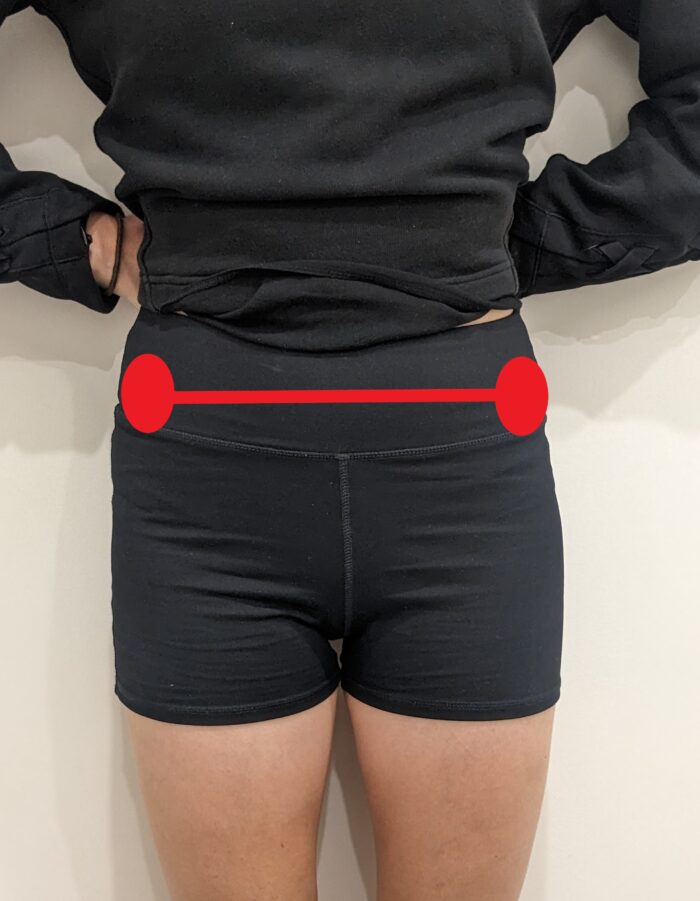
Pic 1: activating your transverse abdominis. Imagine a horizontal line between the bony points at the front of your pelvis. Now imagine trying to pull these two bony points closer together along this line, flattening the line towards your spine. If you need help knowing if you’re activating this properly; place your fingertips just inside the bony points, when you’re activating properly it should feel as if it goes taut underneath your fingers. It is a subtle contraction rather than a big forceful one.

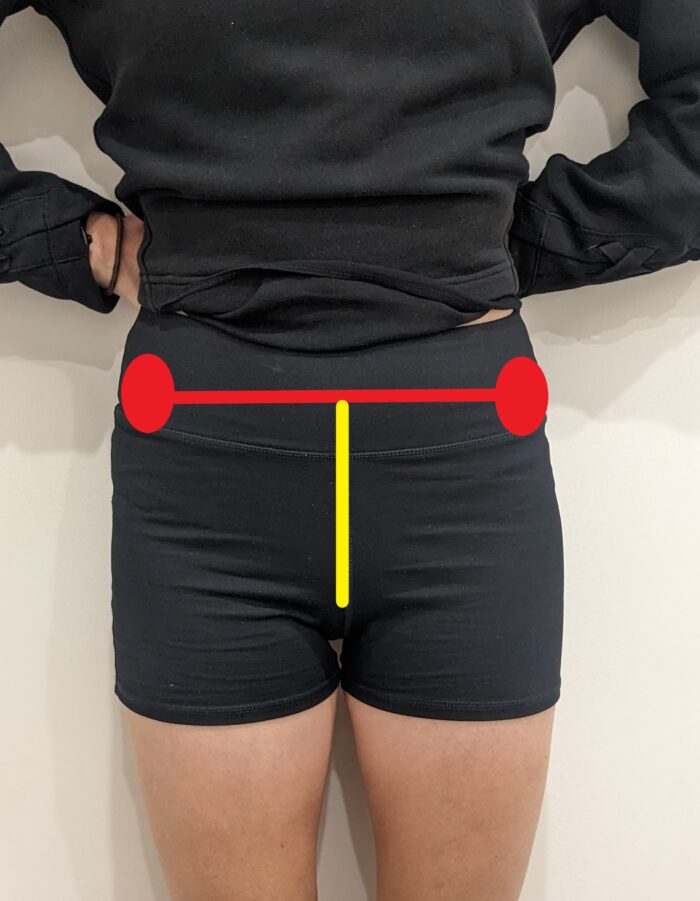
Pic 2: activating your pelvic floor. Imagine a vertical line that goes from your pubic bone up to meet the imaginary horizontal line of the transverse abdominals. Now imagine you are trying to pull up along that vertical line as if you are stopping yourself from urinating. Again, it is a subtle contraction we’re after.

Now let’s try it out on these exercises:

Bent Knee fallouts.

  • Lying on your back bend your knees, feet hip distance apart, arms relaxed down by your side. Activate your core as discussed above. Slowly lower one knee out to the side. Stop when you begin to feel your pelvis rock or your lower back arch. Draw the leg back in to the starting position and then repeat on the other side. Keep alternating between sides. Your feet should stay grounded throughout.
  • To make it harder try lowering both knees out at the same time remembering to keep that core activated throughout. It’s ok to have a little rest and reset before continuing and remember if you want to check you’re activating pop your fingertips just inside the hip bones.

Leg slides.

  • Lying on your back bend your knees, feet hip distance apart, arms relaxed down by your side. Activate your core as discussed above. Slowly slide one foot along the floor (you might need a towel underneath to help get the slide). Stop when you begin to feel your pelvis rock or your lower back arch. Draw the leg back in and then repeat on the other side. Keep alternating between sides. Try to keep your feet grounded throughout, even the one sliding. Rest and reset if needed.

Post written by Laura York (Myotherapist)

Click here to book.

Recharge Your Social Battery


January 14, 2021| contagiouseditor , , , ,

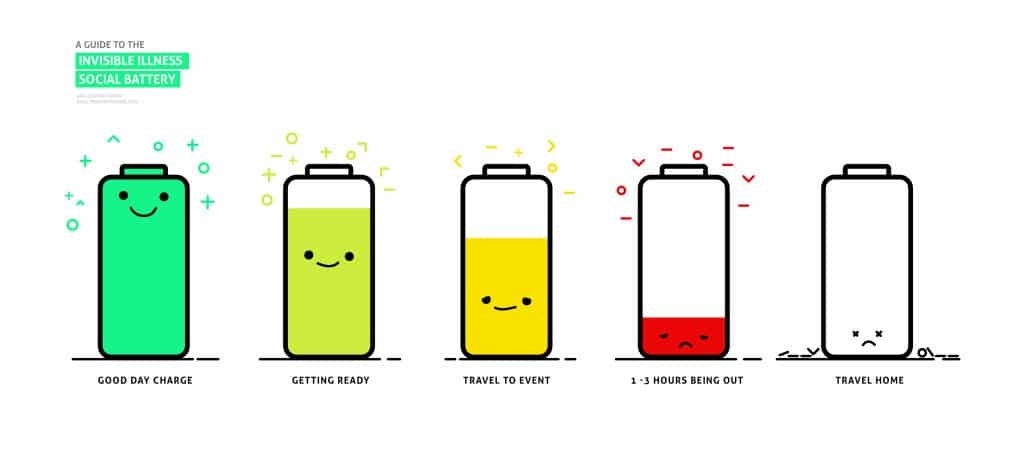
In Melbourne we are currently living a new life: ‘COVID Normal’. Coming out of harsh lockdowns has been a challenging experience for many of us. In the clinic throughout the Christmas and New Year period, we have been hearing many of our patients say “I forgot how tiring it is to socialise!” As we welcome 2021 with open arms, it’s important that we recognise how to put our ‘social battery’ on power-saving mode and how to recharge when we feel depleted.


social battery

Power saving mode: How to recharge as you go

  1. Saying ‘no’ without guilt

Saying ‘no’ can be challenging at times. We can often feeling guilty about staying at home and doing nothing, especially when we feel like there is something else we should be doing. There’s always going to be something else to do: cleaning out the wardrobe, catching up with an old friend for drinks, getting to the dentist for a check-up. However, we need to allow ourselves time to rest and recuperate before the time comes that we have completely worn ourselves down to the core, and there’s no energy left to give. Saying ‘no’ to the never-ending list of things to do (even for half a day), can give you more energy to tackle the list at another time. Understanding that saying ‘no’ doesn’t mean you are being flaky, selfish or lazy; rather you are choosing to prioritise your mental wellbeing and overall health. Allowing yourself to say ‘no’ without guilt will ultimately keep your social battery going stronger for longer.

  1. Limiting your screen time

Putting your phone (as well as other devices) on ‘Do Not Disturb’ for an hour each day will limit the amount of input and feedback coming your way. Each time you get a notification, your brain is absorbing new information and the clogs start turning. Limiting the amount of time you spend in front of a screen each day can significantly reduce the overwhelming feeling of bombardment we get when our social battery starts to run low.

  1. Allowing yourself time to breathe…

… Literally and metaphorically. Breathing sounds like something we do habitually. To some extent, that’s correct. However there are many different breathing techniques that can relax your body and assist in alleviating anxiety and stress.

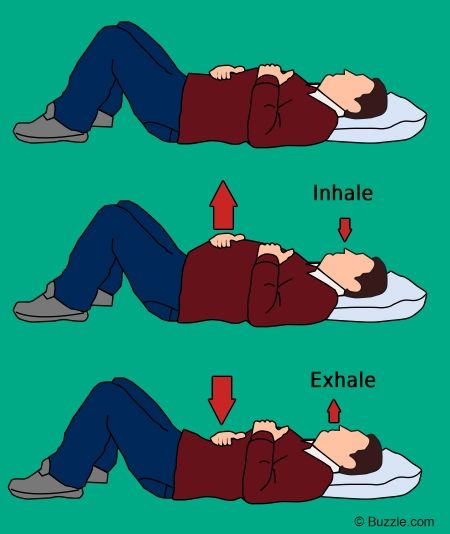
Diaphragmatic Breathing:breathing

To begin, lay comfortably on your back.
Place one hand on your stomach and the other hand on your chest.
Inhale deeply into your stomach. The hand on your stomach should rise.
Exhale slowly. The hand on your stomach should sink.
The hand on your chest should not move throughout this exercise.


  1. Getting out of your head by getting into your mind

‘Mindfulness’ may be a phrase you’ve heard before. Mindfulness is a technique used to relax, reduce stress, alleviate anxiety and clear the mind by increasing your awareness of your surroundings, feelings and breathing. Mindfulness is a range of techniques including guided meditation, breathing exercises, and many other methods.

To begin your journey in mindfulness, you can check out this Ted Talk with Phil Boissiere here!


At Contagious Enthusiasm, we have a wide range of extremely talented therapists from multiple different modalities that can assist you in stress relief, calming the body and relaxing the mind.


  • Chinese Medicine and Acupuncture with Dr Lea Zarnowski
    You can read more about how Chinese medicine and acupuncture can help you here
  • Reflexology with Nicole Seckinger
    You can read more about Nicole and all the wonderful ways she can help you here
  • Life Coaching and/or Counselling with Poli Zoungas
    You can read more about Poli and her incredible work here
  • Clinical Psychology with Dr Meera Aurora
    You can read more about the benefits of clinical psychology here
  • Beauty Therapy with Marysze Molloy
    You can read more about how Marysze can help you feel amazing here
  • Relaxation massage, remedial massage and myotherapy
    You can read about all of our wonderful myotherapists here

To make an appointment, feel free to give us a call on 9502 0650.
Alternatively, you can make a booking online at  https://www.contagiousenthusiasm.com.au/

For more content and information, head over to our Instagram: @contagiousenthusiasm


Written by Ashlee Crisp