Uncategorized

The Story Your Mind is Telling You


The Story Your Mind is Telling You

August 6, 2026| contagiouseditor , , , , ,

You don’t need to have every thought figured out.

If it feels heavier than it should – that’s your body signalling to you.

Come back to what’s true. Come back to yourself.

There’s a moment – small, almost unnoticeable – where a thought quietly becomes a story.

A message hasn’t come back yet. A room has gone still. Something wobbled, only slightly. Before you’ve even realised it’s happening, your mind has picked up the pen and started writing – a whole narrative, complete with a few worst-case endings you haven’t actually reached.

This is simply what minds do. It isn’t a failure. Often, it’s an old pattern doing its best to keep you safe – reaching for what’s familiar, rather than what’s true. In my work with clients, this is one of the first things we gently meet: not to silence the mind, but to understand what it’s actually protecting.

This month, that’s exactly what we are exploring together.


Catch. Pause. Flip. Feel. Trust.

Notice the story beginning.

Let your breath soften around it.

Choose the direction you actually want to feel.

Let your body feel it as though it’s already true.

And trust what’s already in motion.


The Catch.

You don’t have to force the spiral to stop. You simply need to notice it – and in that noticing, a small gap opens. A hand resting on your heart. A few slow breaths. A gentle question: what do I actually know to be true, right now?

Usually, the answer is far calmer than the story suggested.

This is where nervous system work begins – not in the thought itself, but in the body that’s holding it. Through Intuitive Energetics and Kinesiology, we work together to access that gap more easily, so your system learns it’s safe to pause before it reacts.

The Flip.

Here’s what’s also true if your mind can build a difficult story from almost nothing, it can build something beautiful too – the same imagination, simply offered a different direction.

This isn’t about forcing positivity, or pretending things are other than they are. It’s about remembering that you have more say in the story than you may have been taught to believe. Once you’ve caught it, you get to ask a new question – not what if this goes wrong, but what if this unfolds well?

Try saying out loud, even quietly: this is safe. This is ok. You’re not denying what’s real – you’re simply choosing which voice gets lead.

The Feeling.

Your body doesn’t’ know the difference between what’s imagined and what’s real. So let it feel the outcome you’re hoping for – the relief, the warmth, the settling. Even a minute of this, felt fully, plants something. That felt sense is often the beginning of what actually unfolds.

So much of our worry is about a moment that hasn’t even arrived. When you catch yourself spiralling forward, come back here – to this breath, this room, this moment. It’s usually more than okay.

The Trust.

Underneath the noise of the mind is a quieter voice – the one that already knows what you truly desire, beneath any fear of losing what you have. Stillness is where that voice gets room to speak.

You’ve caught the story. You’ve flipped it. Now, the invitation is simply to let it unfold – not through more effort, but through trust. You’ve already set the direction. The rest is allowed to arrive in its own time.


An Invitation.

This month we simply invite you to notice.

Not to fix. Not to force. Just to catch the story as it begins and remember – gently – that you always have a choice in how it continues.

If this is something you’d love support with, this is exactly the kind of work I love facilitating with clients – through Intuitive Energetics and Kinesiology, helping your nervous system feel safe enough to let a new story take root.

You don’t have to untangle it alone.

With warmth,

Debbie Langer.

Holistic Health Practitioner

Book a discovery call

0420 500 111

Change as a Doorway Home


July 15, 2026| contagiouseditor

Change often arrives quietly – not as a loud verdict, but as a gentle reframe. Fatigue, mood shifts, a blurred sense of identity: these can feel overwhelming, but they’re not failures. They’re compass points, guiding you toward what truly matters.

Your body speaks in felt senses – an emotional flare, a quiet lull, a foggy moment. Learning to listen can lead you to a steadier, more grounded way of living.

Alignment is practice, not a destination

Alignment isn’t about force or schedule, locking into fixed identity, or chasing a perfect outcome. It’s about honouring what’s true right now and letting that truth guide your choices – softening the grip on “should be” and widening the space for what actually fits.

A gentle map for transition
  • Validate the experience – name what’s happening without judgement.
  • Listen for the core message – what is your body asking for? Slower pace, clearer boundaries, rest, connection?
  • Practice small, compassionate recalibrations – one mindful breath before a decision, a brief pause before reacting.
  • Trust your inner wisdom as a partner – you’re not navigating this alone.
  • Allow gentle momentum – small, steady shifts accumulate into real direction over time.
Reconnecting with you

As the seasons shift, so can our inner landscape. This is an invitation to explore small, honest shifts that help you reconnect with your body, trust your intuition and make choices that align with who you truly are.

It’s not about what you’ve lost – it’s about what you are creating now. Imagine waking up to more clarity, more confidence, and more energy for what matters. Imagine trusting your desires and yourself again.

From overwhelm to capacity

What we hear so often is the longing for less stress. What we’re inviting in is more peace. A gentle shift from overwhelm to capacity helps you breathe, decide and gain a clear sense of direction – so you have more energy for the things you love.

This isn’t about erasing what you’re feeling. It’s about shaping a life that feels truly in tune with you.

What listening to your intuition creates
  • You stop second guessing decisions – and gain more confidence.
  • You align with your priorities with what matters – and gain more focus.
  • You honour your desires – and create better boundaries.
  • Your presence in relationships deepens – and connection grows.
  • You trust your intuition – and cultivate greater self-belief

Tiny, honest steps guided by inner listening produce meaningful transformation. The goal was never perfection – it’s consistency: showing up, listening and acting in alignment with who you truly are.

If you would like support as you navigate this season of change, Nurture Your Essence together with you, gently guides you back to listening to your intuition.

Nurture Your Essence is here to support.

For more information, you can find Debbie’s website here.

Debbie is a qualified Kinesiologist; her work blends intuitive energetics and kinesiology and is guided by what your body and nervous system needs moment to moment.

Debbie specialises in supporting women through overwhelm that comes with transition, the shift from motherhood through perimenopause and menopause, changes in relationships and evolving career paths. She also runs meditation circles for groups to enjoy her skills.

Booking with Debbie can be made online or by giving us a call on (03) 9603 0334.

Elbow pain


February 15, 2024| contagiouseditor , , , , , ,

Have you had pain on the inside or outside of your elbow? Have you been told it’s the classic “tennis elbow” or “golfer’s elbow”? Lateral and Medial epicondylitis is often referred to as tennis and golfer’s elbows respectively but let’s delve a little deeper and have a look at both conditions and how they come about.

Getting to know the elbow joint.

The elbow is made up of three bones; the humerus, radius and ulna but it isn’t as simple as it seems. The joint itself is actually made up of three different joints.

There’s the humero-ulna joint which is the hinge joint. This allows us to flex and extend our arm.

The humero-radial joint which is a combination of a hinge and pivot joint. This allows for flexion and extension of our forearm but also allows us to turn our hand over.

And finally, there’s the radio-ulna joint which is a pivot and is vital in our ability to turn our hand over (supination and pronation).


Did you know?

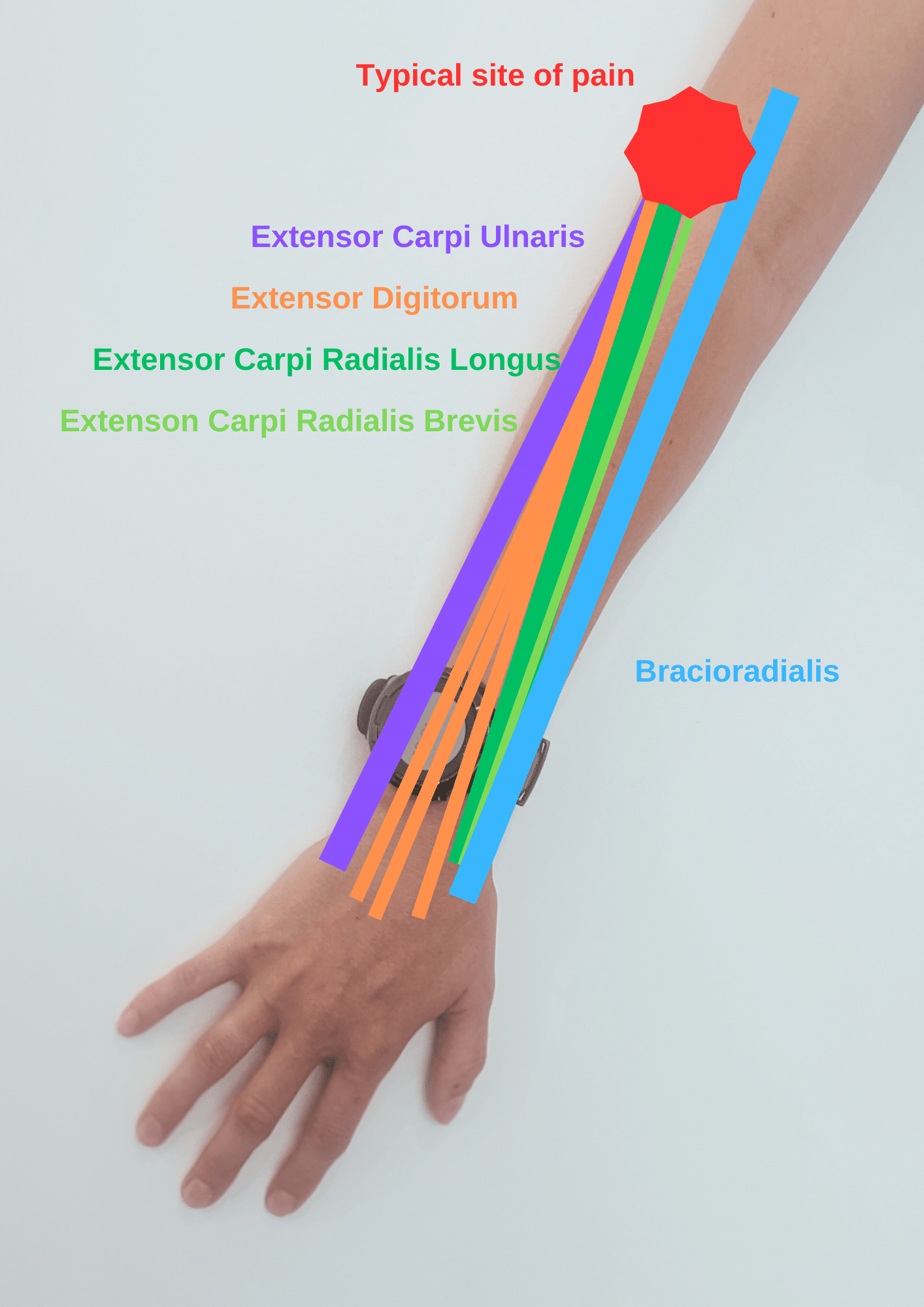
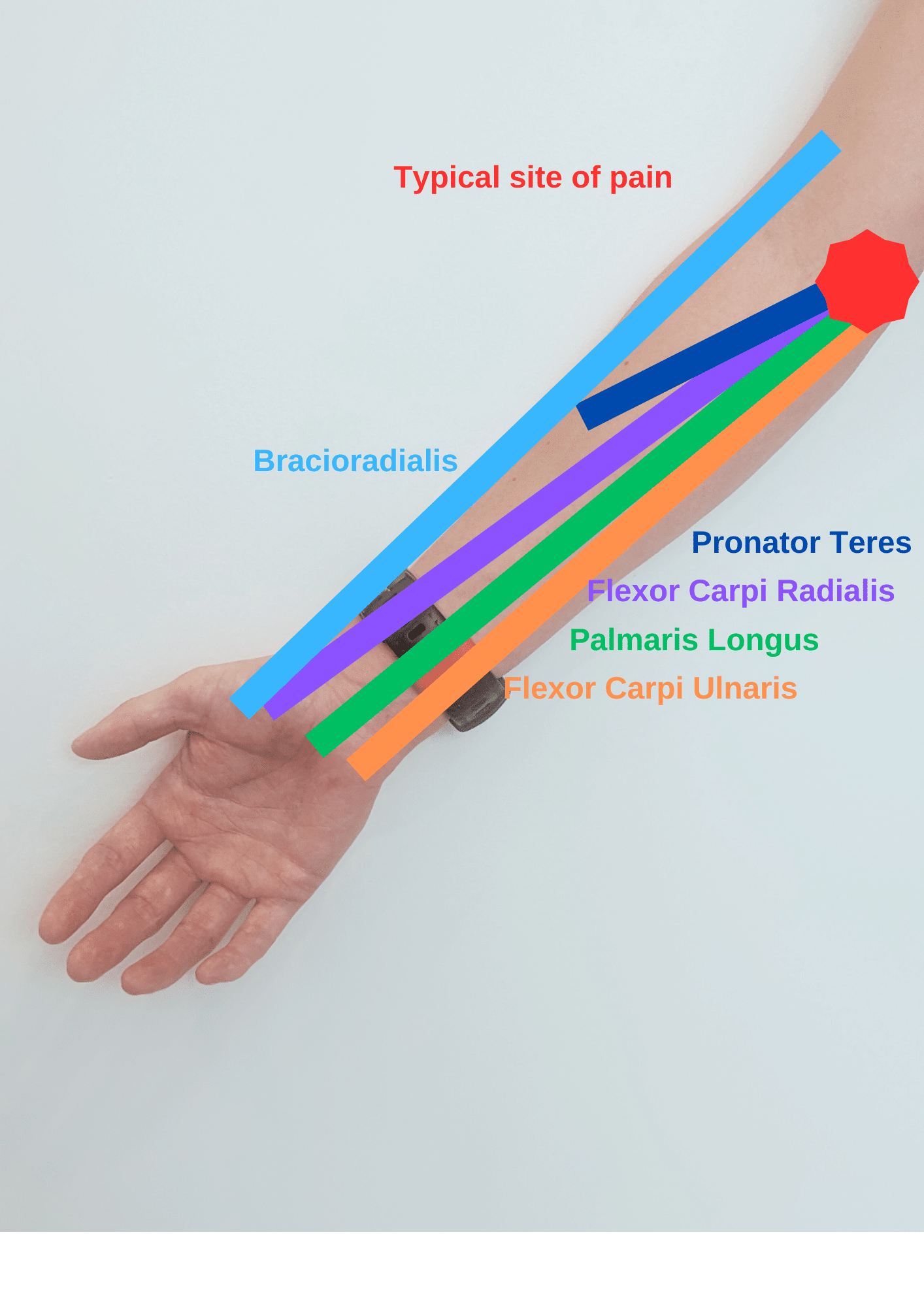
There are 16 muscles in total that cross over the elbow joint. 4 muscles attach onto the lateral epicondyle and 4 onto the medial epicondyle. These are the muscles that generally cause epicondylitis.


How does pain typically present?

Typically, the pain is at or near the attachment site of these muscles. Lateral epicondylitis is also known as “Tennis elbow”. It affects the extensor muscle of the forearm and the outside of the joint. Medial epicondylitis is known as “Golfers elbow”. It affects the flexor muscles of the forearm and the inside of the joint. Often these conditions can happen even without doing these sports!

Pain can also radiate down the arm along the line of the muscles to the wrist. There may also be weakness in grip strength and difficulty holding objects.

Both conditions are likely to be caused by repetitive use/overuse such as computer use, incorrect loading of the muscles such as heavy lifting. Overuse or incorrect loading causes the muscles to get tight. The tight muscles then pull on their attachment sites. With the muscle bellies being high up in the forearm they tend to pull at the tendon on the elbow.


Did you know?

There is a muscle in the forearm that not everybody has! 14% of the population doesn’t have the Palmaris Longus muscle. You can also have it on one forearm but not the other! You can check whether or not you have it by touching your little finger and thumb together and slightly flexing your wrist. If you do have a Palmaris Longus the tendon will pop up in the middle of your wrist.


Treatment:

  • Rest and activity modification i.e. limiting the use of the affected area.
  • Reduce load through the area i.e. lower the weight you’re carrying or trying to lift.
  • An elbow brace/strap can help take the pressure and pull off the muscle attachment site.
  • In severe cases a steroid or cortisone injection may be an option.

Once your pain is manageable and you are able to comfortably move your wrist and elbow without too much pain you can begin to include a few gentle stretches. Once these are comfortable you can add in some light strengthening exercises.

At home exercises to help with elbow pain:


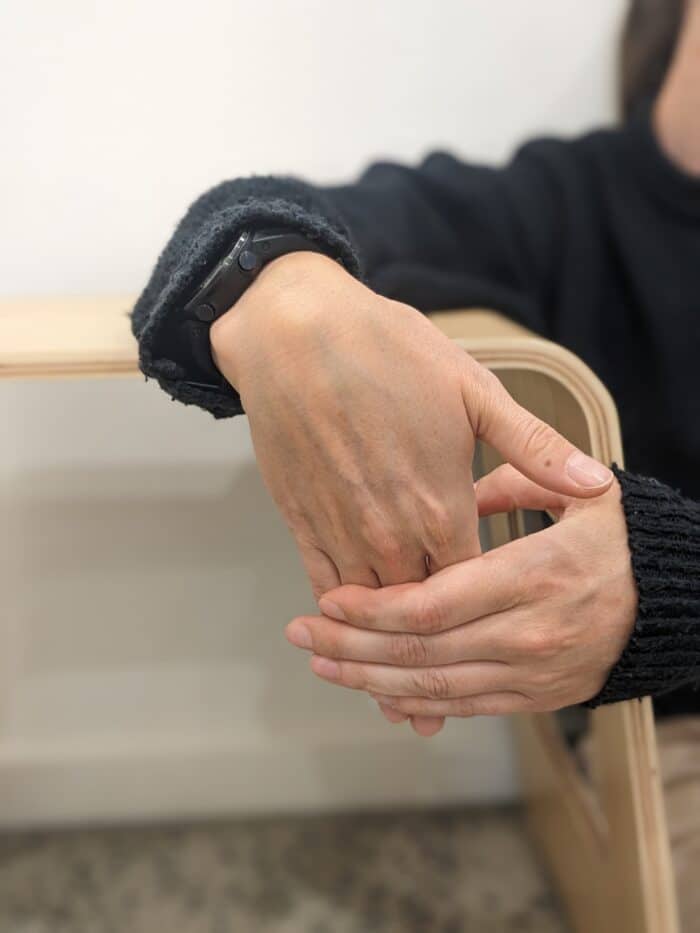
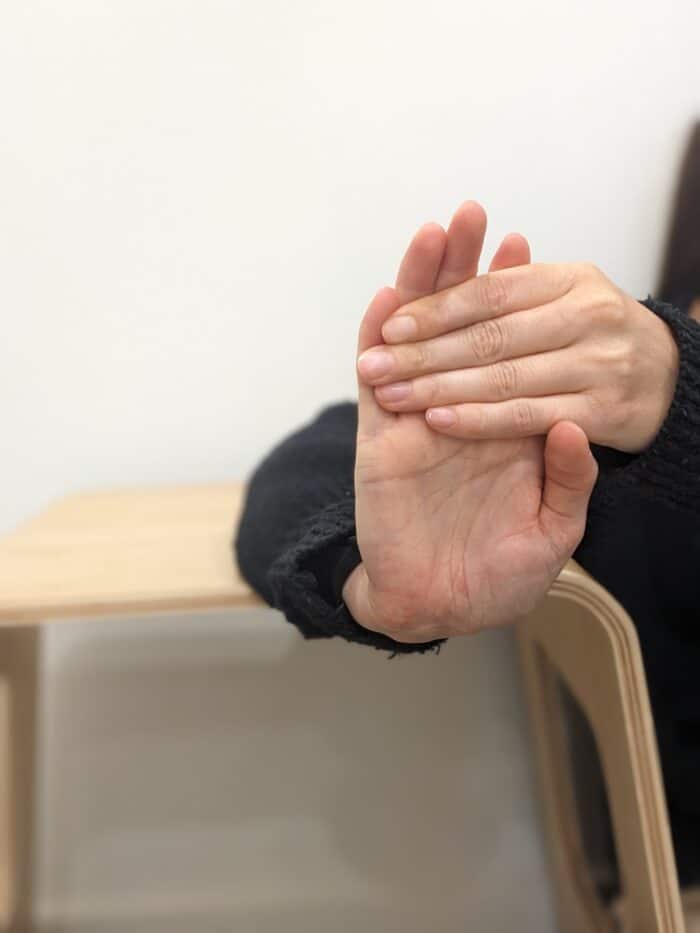
Stretching for elbow pain

To help with pain on the outside of your elbow:

  • Arm out straight.
  • Palm facing the floor.
  • Bend wrist down.
  • Add in over pressure.

And for pain on the inside of your elbow:

  • Arm out straight.
  • Palm facing up.
  • Bend wrist down.
  • Add in over pressure.

Strengthening for elbow pain

Tendons repair well under load. Managing this load appropriately is best done under the care of a professional however there are a few basic strengthening exercises. They should not cause you pain so if they do, stop. Begin with moving slowly through the movement, as your pain decreases and strength increases you can move more quickly or add more weight.

Try this for general strengthening through the area:

  • Place an elastic band around outside of the fingers and thumb.
  • Spread your fingers and thumb out against the resistance of the band.

This one is great for pain on the outside of your elbow:

  • Elbow bent and forearm resting on a surface so your hand is off the edge.
  • Place chosen weight in hand.
  • Palm facing down.
  • Raise the weight so that the wrist bends up.
  • Keep your forearm in contact with the surface.

If you struggle with the above exercise this one is also good for pain on the outside of your elbow:

  • Elbow bent and forearm resting on a surface so your hand is off the edge.
  • Place chosen weight in hand.
  • Thumb facing toward the ceiling.
  • Raise the weight so that the wrist bends up.
  • Keep your forearm in contact with the surface.

And this one works well pain on the inside of your elbow:.

  • Elbow bent and forearm resting on a surface so your hand is off the edge.
  • Place chosen weight in hand.
  • Palm facing down.
  • Raise the weight so that the wrist bends up.
  • Keep your forearm in contact with the surface.

Come in and see one of our brilliant Myotherapists and they will endeavour to help your elbow pain.

Click here to book an appointment.

Post written by Laura York (Myotherapist)